
When we hear the word “meltdowns,” our first thought might be of toddlers—and that would certainly be appropriate! However, meltdowns can be the observable signs of system overwhelm because of social, emotional, and/or physical pressures. Meltdowns can happen at any age! Middle school is a time with a LOT of pressures that can lead to occasional or recurring meltdowns. Let’s dig into what is happening and how we can help.
Why can middle school feel so overwhelming?
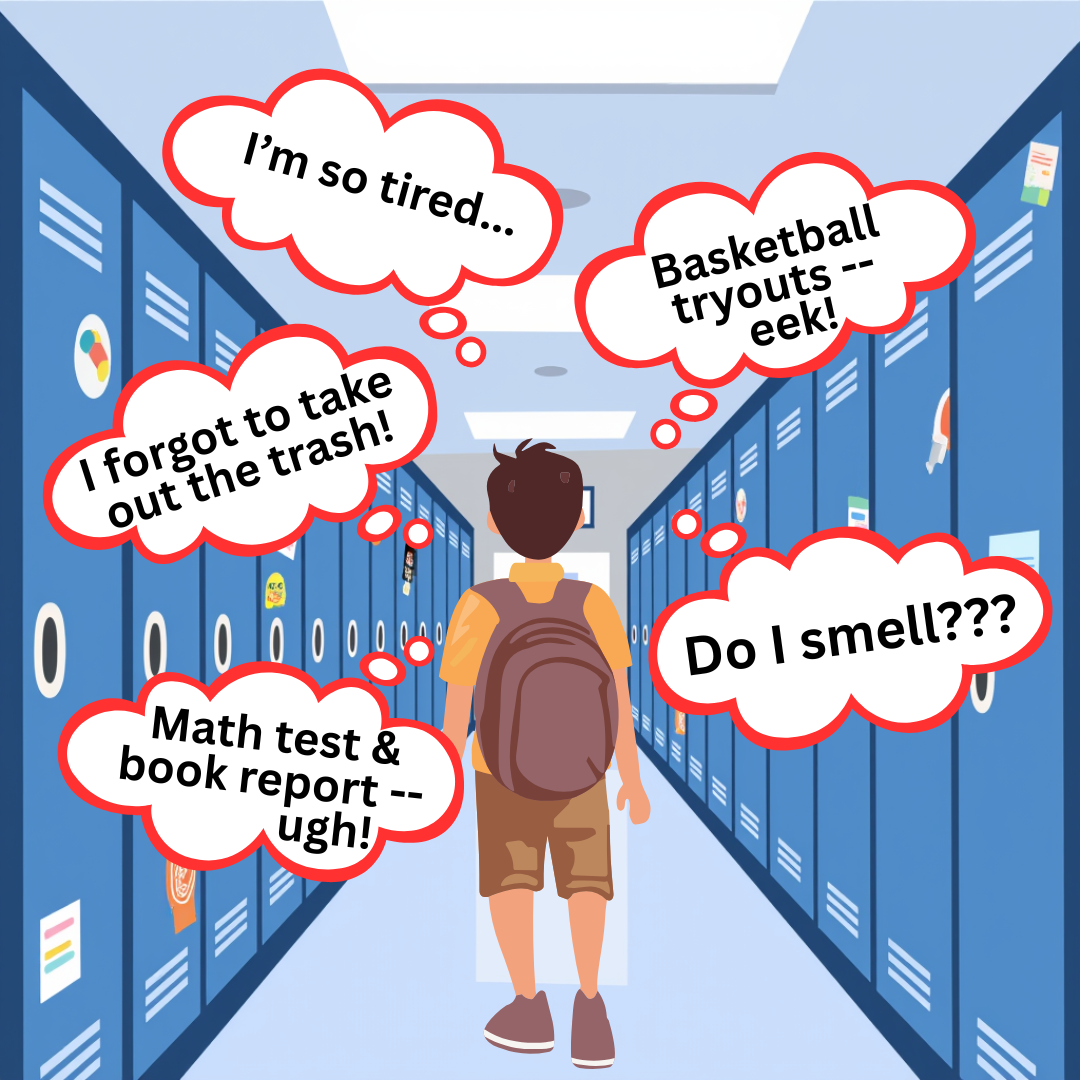
Developmental changes: In middle school, children are experiencing a variety of developmental changes. They are capable of more responsibilities and chores, and in return, they are often granted more privileges, such as roaming the neighborhood and getting a phone. Each of those changes comes with increased demands on managing information and time. This increased independence is natural, and it’s also paired with the tension between independence FROM parents and togetherness WITH parents. Every day can have a different feel for them—and for us!
Physical changes: Puberty is often in full swing during the middle-school years. This comes with hormone fluctuations, body changes, and new hygiene needs and routines. Children may become more aware of or concerned about self-image and relationships during this time. Establishing a more mature identity can become a strong priority during these years.
Academic changes: Middle school often introduces separate academic subjects with different teachers and movement between classes. This shift requires lots of new skills for managing materials, schedules, assignments, and due dates. Additionally, students have to actually complete, hand in, and perform well on assignments and tests, which require more advanced planning and study skills.
Social changes: Children often meet new peers from different elementary schools when they start middle school. Friend groups may shift and evolve, which can be painful and confusing—or exciting! As children mature, they may develop new interests and activities, leading to busier schedules and changes in how—and with whom—they spend their time.
Taken all together, this is a LOT to manage! Of course our middle schoolers struggle with overwhelm sometimes! And there is a lot we can do to set them up for success and help them through meltdowns when they happen.
How can we help?
Many of these new demands call on executive functioning skills: the skills we use to get started, plan, organize, remember information, manage time, shift gears, and regulate our responses. These skills are still developing during middle school. A child may understand an assignment perfectly and still struggle to gather the materials, begin the work, and remember to turn it in!
The following supports give children concrete ways to manage those demands. Choose one or two to start, and build the systems WITH your middle schooler so they have a voice in what works.
1. Use a planner to get the plan out of their head.
“Remember everything you need to do” is a big assignment all by itself! Help your child choose a paper or digital planner that provides one dependable place to see daily responsibilities.
Together, practice a simple routine:
Write it in: Record assignments for each subject, including due dates, plus activities and responsibilities outside of school.
Choose the order: Number tasks based on deadlines, available time, and energy. Sometimes starting with a short, manageable task helps get things moving!
Estimate the time: Write down about how long each task might take. Leave room for breaks and unexpected challenges.
Check it off: Mark completed tasks, and carry unfinished work forward so it doesn’t disappear.
A school portal can help identify assignments, but a list of due dates still needs to become a plan for WHEN to do the work. Include studying, too: “Study for science” becomes much more manageable when it says, “Review vocabulary for 10 minutes on Tuesday.”
Compare time estimates with actual time occasionally, with curiosity: “We thought that would take 15 minutes, and it took 30. What should we plan for next time?” The American Academy of Pediatrics recommends helping teens develop systems for managing time rather than relying on repeated adult reminders.
2. Establish daily and weekly routines.
Predictable routines reduce the number of things children have to figure out and remember each day. An after-school rhythm might include a snack, some downtime or movement, a planner check, and then homework. An evening routine might include submitting finished work, packing the backpack, and checking tomorrow’s schedule.
Keep the routine visible with a short checklist, and build in reminders for transitions: “In 10 minutes, we’ll wrap up the game and check the planner.”
A timer can make a work period feel more concrete. Try a manageable stretch of focused work followed by a planned break, and adjust together. If a countdown creates pressure, try a clock or a timer that counts UP instead!
A brief weekly preview can also help everyone spot busy days before they arrive: “Thursday has karate and a project due Friday. When could we work on the project earlier in the week?”
3. Create a dependable place for homework and materials.
Choose a place to work that is relatively free from distractions, with supplies close by. That might be a desk, the kitchen table, or another comfortable spot. Some children prefer quiet; others work better with an adult nearby. Making the workspace consistent helps children to build an association between the place and the activity — when they sit down at their workspace, their brains are ready for the work!
Give important items a consistent home: a place for the backpack, a folder for papers to turn in, and a charging spot for the school device. A portable supply bin can work well if the homework space serves other purposes during the day.
Agree on a plan for phones and notifications during work periods. The goal is to make it easier to focus without having to resist a new distraction every few minutes!
4. Break tasks into steps—including the LAST step!
“Finish your project” sounds like one task, but it may involve reading directions, finding information, taking notes, creating something, checking the work, and submitting it. That’s a lot to hold in mind!
Help your child write down the steps and put them into the planner. For a longer assignment, work backward from the due date and spread the steps across several days.
For example, a written assignment might include:
Read the directions and identify what needs to be turned in.
Gather materials and ask questions about anything unclear.
Make an outline.
Write a draft.
Check the draft against the directions and revise.
Submit the assignment and confirm that it went through—or put the paper in the turn-in folder and plan when to hand it in.
If getting started is the hardest part, make the first step especially small: “Open the document and type the title.” Once that is done, identify the next step. And remember: completing the work and handing it in are two separate tasks!
5. Provide adult support that matches the need.
Independence develops with practice and support. A short, predictable check-in can give your child a chance to ask for help before things pile up.
Try questions such as:
“What needs to happen today?”
“Show me what’s finished and what still needs a step.”
“Where are you getting stuck?”
“Do you need help understanding it, planning it, or getting started?”
The answer matters! A child who doesn’t understand the content may need teacher guidance. A child who understands it but feels overwhelmed may need help organizing the steps. A child who can’t begin may benefit from an adult sitting nearby while they get started.
Teachers and caregivers can use the same approach: clear written directions, manageable steps, and a brief check that the student knows what to do next. As a system becomes dependable, gradually hand over more of it. If things start falling apart, adjust the support together.
6. Protect time for physical health, connection, and recovery.
A full planner still needs room for being a person! Include regular meals, enough sleep, movement, enjoyable activities, and unstructured downtime. Sometimes the schedule itself needs to get smaller.
Protect opportunities for connection, too—at dinner, at bedtime, or in the car. Make room for conversations that aren’t about grades, chores, or what still needs to get done! Age-appropriate puberty books and open conversations can also help children understand the changes they are experiencing.
Pay attention to patterns. Does overwhelm tend to happen right after school? During late-night homework? After a busy weekend? Those patterns can help you decide whether your child needs a snack, a quieter transition, an earlier start, or fewer demands. Predictable routines and supportive relationships are important foundations for emotional well-being.
7. Make a plan for overwhelm BEFORE it happens.
During a calm moment, help your child identify their early warning signs. Maybe their shoulders tighten, their voice gets louder, they reread the same sentence, or every task suddenly feels impossible.
Then choose a simple way to communicate the need for help: “I’m getting overwhelmed,” “Can you help me find the first step?” or an agreed-upon signal. At school, this might involve a private signal to the teacher or a planned check-in with a trusted adult.
Decide together what a break could look like and how to return afterward. For example: “I’ll get some water and take a quiet break. Then we’ll look at just the first question.” Practice the plan when things are going well, so it feels familiar when it’s needed.
8. During a meltdown, help them settle before asking them to solve.
Even with good supports, meltdowns may happen. In that moment, simplify. Lower your voice, use fewer words, and pause nonurgent demands. Acknowledge the feeling: “This feels like too much right now. I’m here.”
Offer a familiar option, such as quiet company or some space nearby, and maintain calm boundaries around safety. Save the detailed questions, planning, and teaching for later. Adults can help children regulate by managing their own responses and modeling calmness—a process called co-regulation.
Once your child has recovered, have a brief conversation about what happened: “Where did things start to feel too hard? What might help next time?” Choose one adjustment, such as starting earlier, clarifying directions, or reducing the number of tasks at once.
If meltdowns are frequent, intense, unsafe, or interfering with school, relationships, or family life, reach out to your child’s pediatrician and school team. Additional support may help identify what is contributing to the overwhelm and what your child needs.
Moving Forward Together
Our middle schoolers are managing a lot of change while learning the skills to handle it. With practical systems, steady connection, and opportunities to practice, we can help them feel more capable—and less overwhelmed—one step at a time.