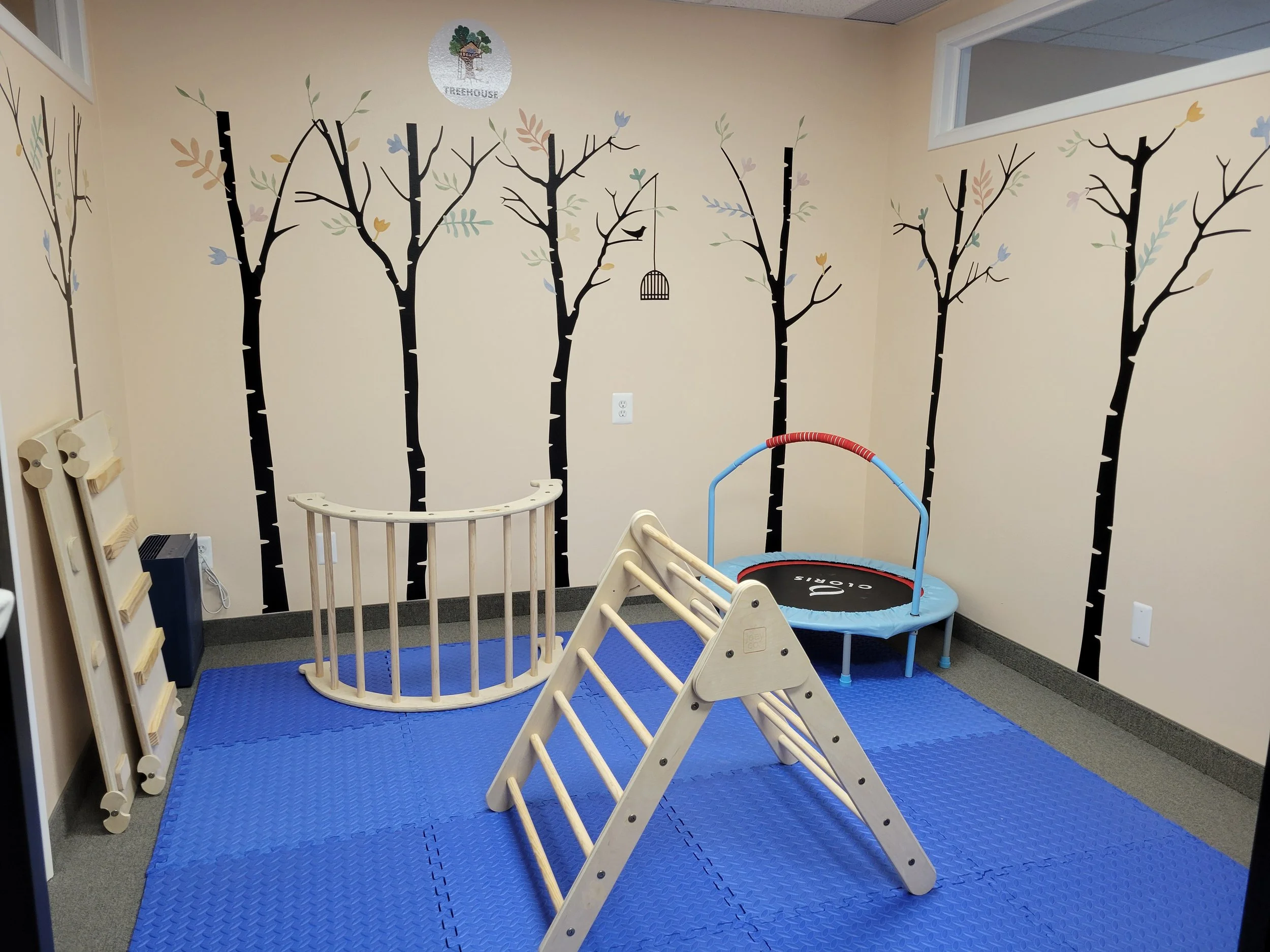
At Stewart SLP, we believe learning happens best when kids are moving, exploring, and having fun. Ever notice how your child seems to learn a new word while they’re climbing, spinning, or running — not sitting still at a table? That’s because speech and language are deeply connected to how their bodies experience the world.
Our brains don’t grow in isolation — they grow through sensory and movement experiences. Let’s explore how this connection works (and why your child’s wiggles might be helping, not hurting, their progress!).
1. The Body Leads the Brain
Before a child can understand “up,” they need to feel “up” — being lifted, climbing stairs, or reaching high for a toy. Those body experiences give meaning to words long before they’re spoken.
Big body play like jumping, climbing, and spinning activates the vestibular and proprioceptive systems, which help the brain understand where the body is in space. When those systems are organized, children can attend, focus, and engage — setting the stage for communication.
Try this at home: Before sitting down for speech practice, try a few minutes of movement — wheelbarrow walks, jumping jacks, or a quick dance break. A regulated body is a ready-to-learn body.
2. Regulation Comes Before Communication
We all know how hard it is to think clearly when we’re dysregulated — hungry, tired, or overstimulated. Kids are no different! When their sensory systems are overwhelmed, talking or learning new skills can feel like too much.
Movement is one of the most effective ways to help children regulate. It calms their nervous systems, organizes their brains, and creates the sense of safety they need for communication to flourish.
Our favorite pre-speech warm-up:
Try “heavy work” like pushing a laundry basket, carrying books, or doing animal walks. These simple activities help organize the sensory system so your child feels grounded and ready to learn.
3. Sensory Play Makes Language Stick
Language grows through experiences, not flashcards. Sensory play — things like water tables, playdough, kinetic sand, cooking, or nature walks — gives kids real-life meaning for the words they’re learning.
Instead of memorizing vocabulary, they’re feeling what “wet,” “sticky,” or “pour” really mean. That kind of embodied learning creates lasting understanding.
Try this:
While playing with playdough, talk about what you’re doing together:
“You’re rolling it! It’s squishy! Let’s make a snake — roll, roll, roll!”
That natural narration turns playtime into language time.
4. Movement Builds Connection — and Connection Builds Communication
When kids move, they’re not just exercising their bodies — they’re engaging their brains and connecting with you. Shared movement (like dancing, swinging, or pretending to be animals) strengthens co-regulation — that powerful rhythm that says, “We’re in sync.”
Bringing It All Together
Movement isn’t just “play” — it’s the foundation for speech, language, and learning. When we nurture the sensory system, we give children the stability, regulation, and confidence they need to communicate with the world.
At Stewart SLP, we see movement as one of the best tools for connection. And connection, more than anything, opens the door to communication.